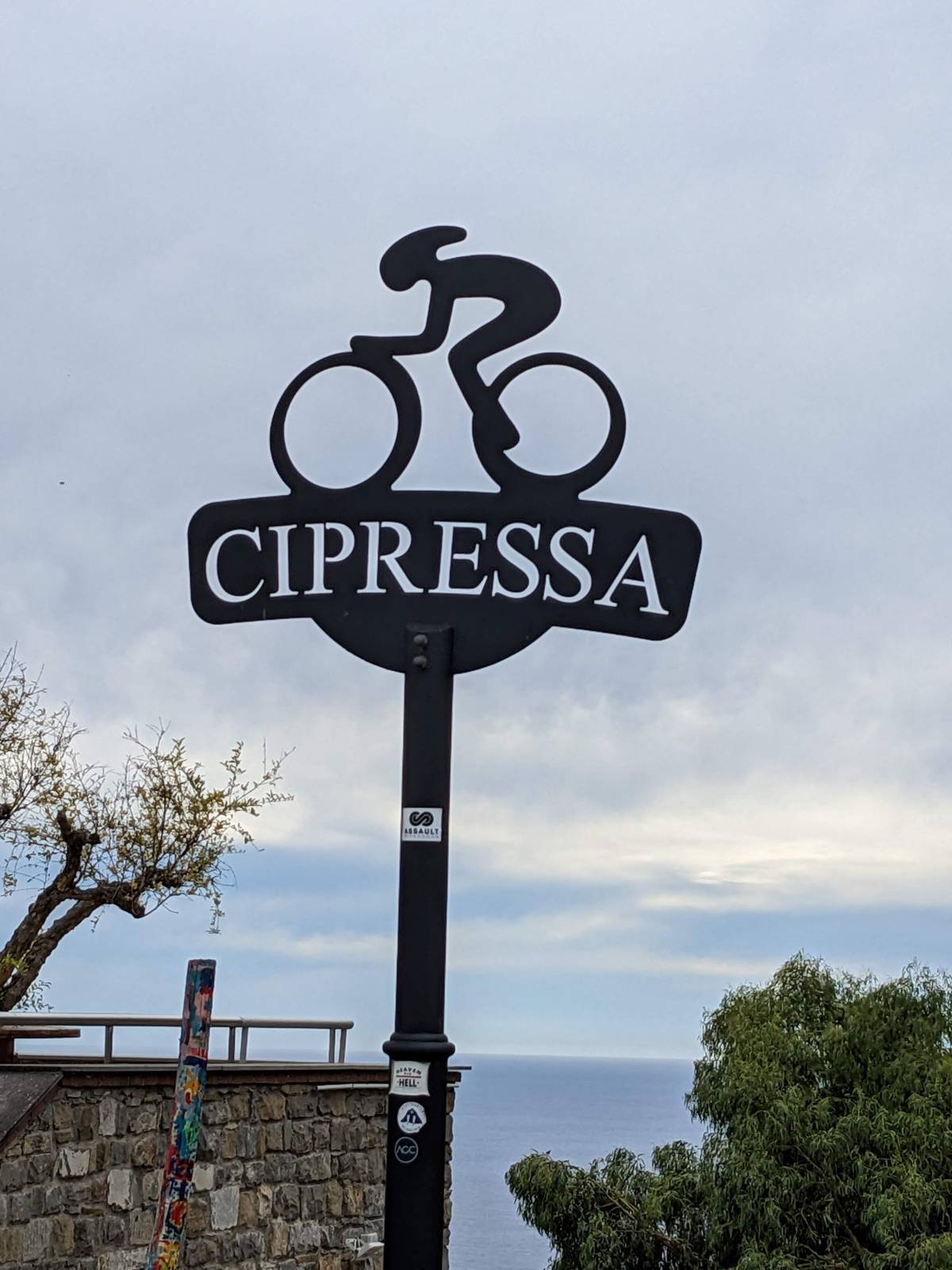
The second-to-last climb of Milan–San Remo, straight up from the sea to the church tower of Cipressa: 5.65km at 4.1%. I've ridden it from our base in Imperia on two trips: four times up the ridge in one afternoon in 2022, and twice more in September 2026, when I photographed every kilometre board.
If you follow pro cycling, you know the name. Every March the riders of Milan–San Remo come along this coast after nearly 300km, turn inland at San Lorenzo al Mare, and race up to Cipressa, the climb that starts to break the race up before the Poggio. We've stayed in Imperia, just along the coast, several times, so it's become one of my regular rides.
Milan–San Remo And The Cipressa
Milan–San Remo, La Classicissima, was first held in 1907 and is the longest one-day professional race in modern road cycling, at around 298km. The route crosses the Apennines at the Passo del Turchino, drops to the sea, and follows the Ligurian coast over three short capes between Alassio and Imperia: Capo Mele, Capo Cervo and Capo Berta. Then come the two climbs that decide it. The Poggio, 5.4km from the finish, was added in 1960. The Cipressa was added in 1982 to toughen the race before the Poggio. The finish is on Via Roma in Sanremo. Eddy Merckx won it a record seven times; Mathieu van der Poel won in 2025, and in 2026 Tadej Pogačar.
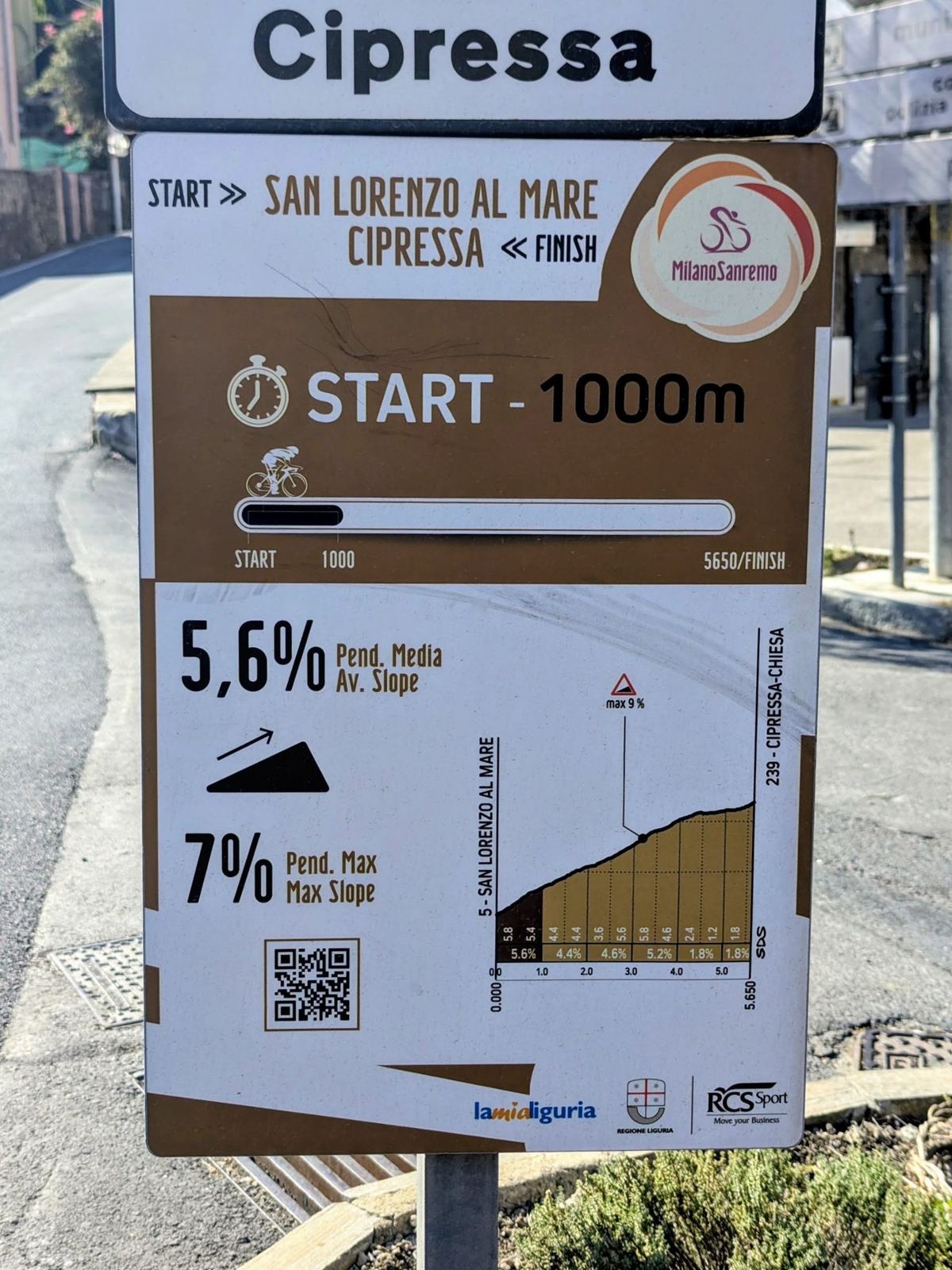
The climb starts on the coast at San Lorenzo al Mare and finishes in the village of Cipressa, a hilltop village of about 1,200 people, where the bell tower of the church marks the top. The official board at the summit gives the numbers: 5,650m long, 234m of climbing, 4.1% average and 9% at the steepest. It's not long or steep by Alpine standards. What makes it hard in the race is the speed they hit it at.
Ride 1Four Times Up The Cipressa RidgeFriday 30 September 2022
How The Day Went
9.4km+214m
5.9km
4.4km+224m5% average
3.5km−195m
3.2km+183m5.7% average
3.1km
3.2km+179m5.5% average4 min faster
11.7km
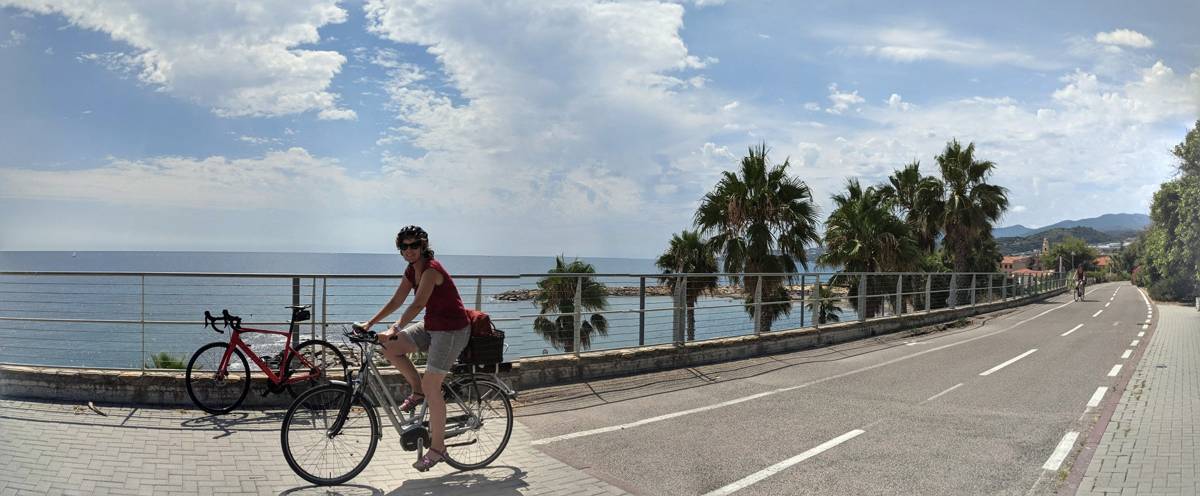
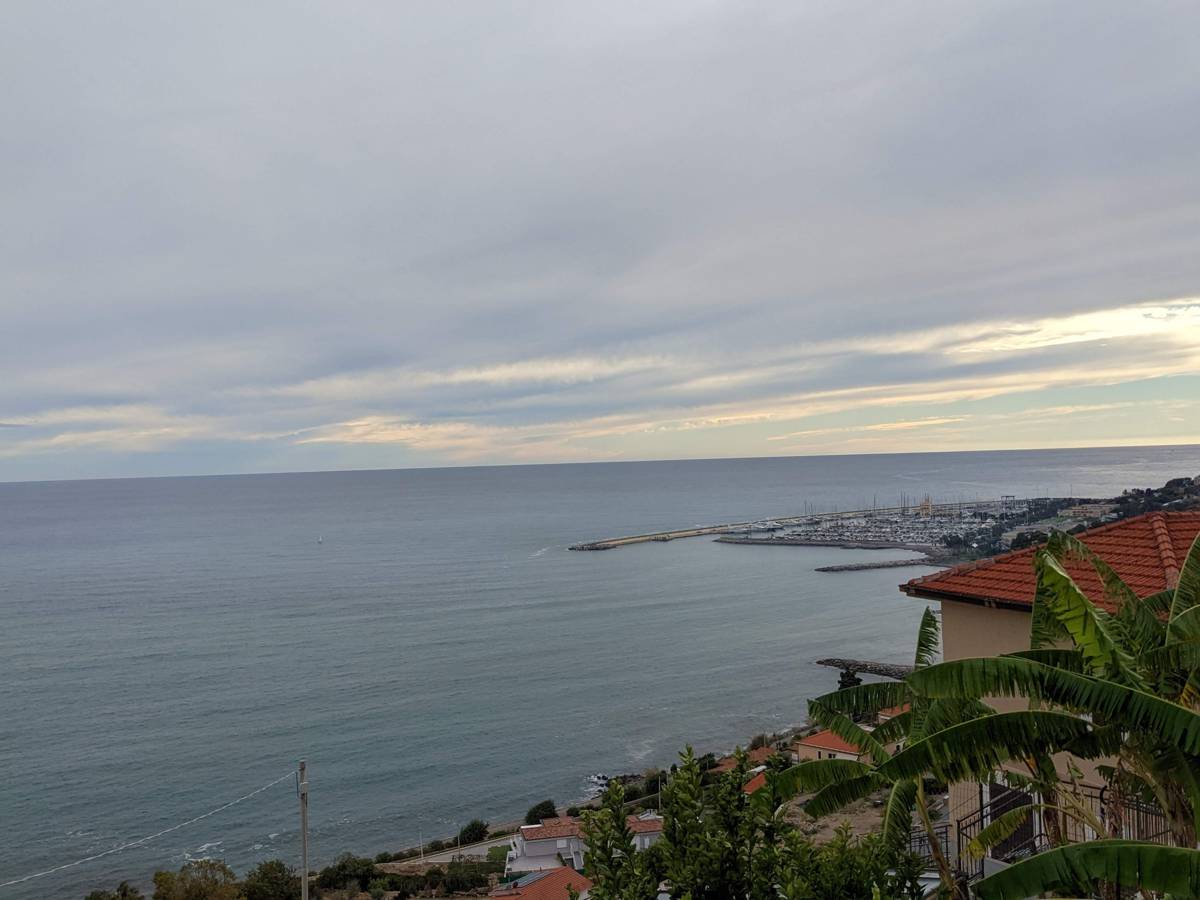
An afternoon of repeats. I rode along the coast from Imperia to San Lorenzo and up to Cipressa the first time, then dropped back to the sea and kept going up and down: once below Costarainera and then twice straight up from Aregai to the village, 3.2km and about 180m each time, at 5.5 to 5.7%. The last one took me 18 minutes, four minutes quicker than the one before. 44.7km and 981m of climbing in two hours 18 minutes of riding, with Strava's Wandrer.earth note telling me I'd now covered a quarter of the roads of Santo Stefano al Mare.
Ride 2The Race Climb, Kilometre By KilometreSunday 27 September 2026
How The Day Went
9.3km+202m
3.5km−173m
4.2km+178mfinish board at 14:46
12.2kmphotos of every board
24 min
9.9kmflat
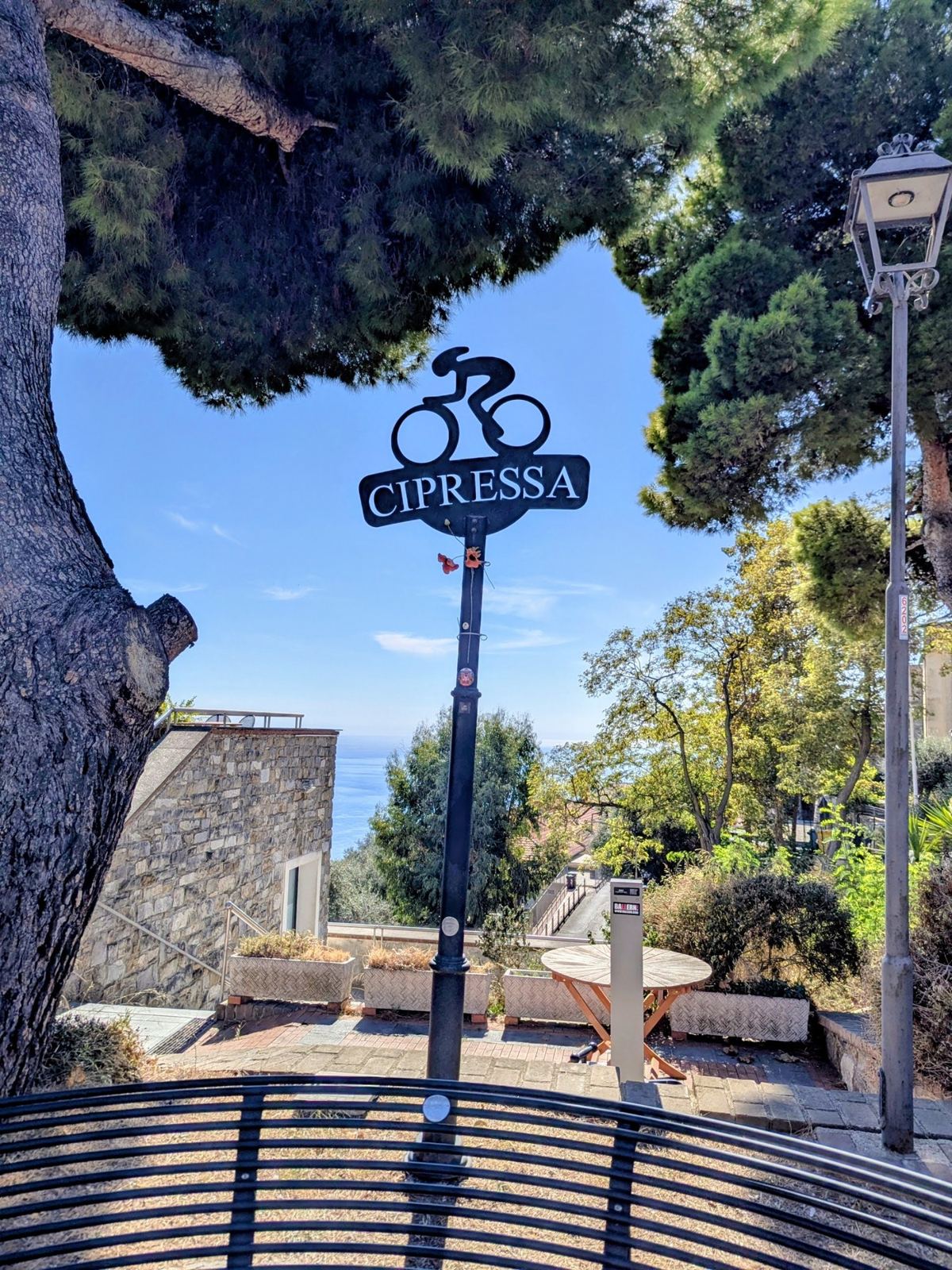
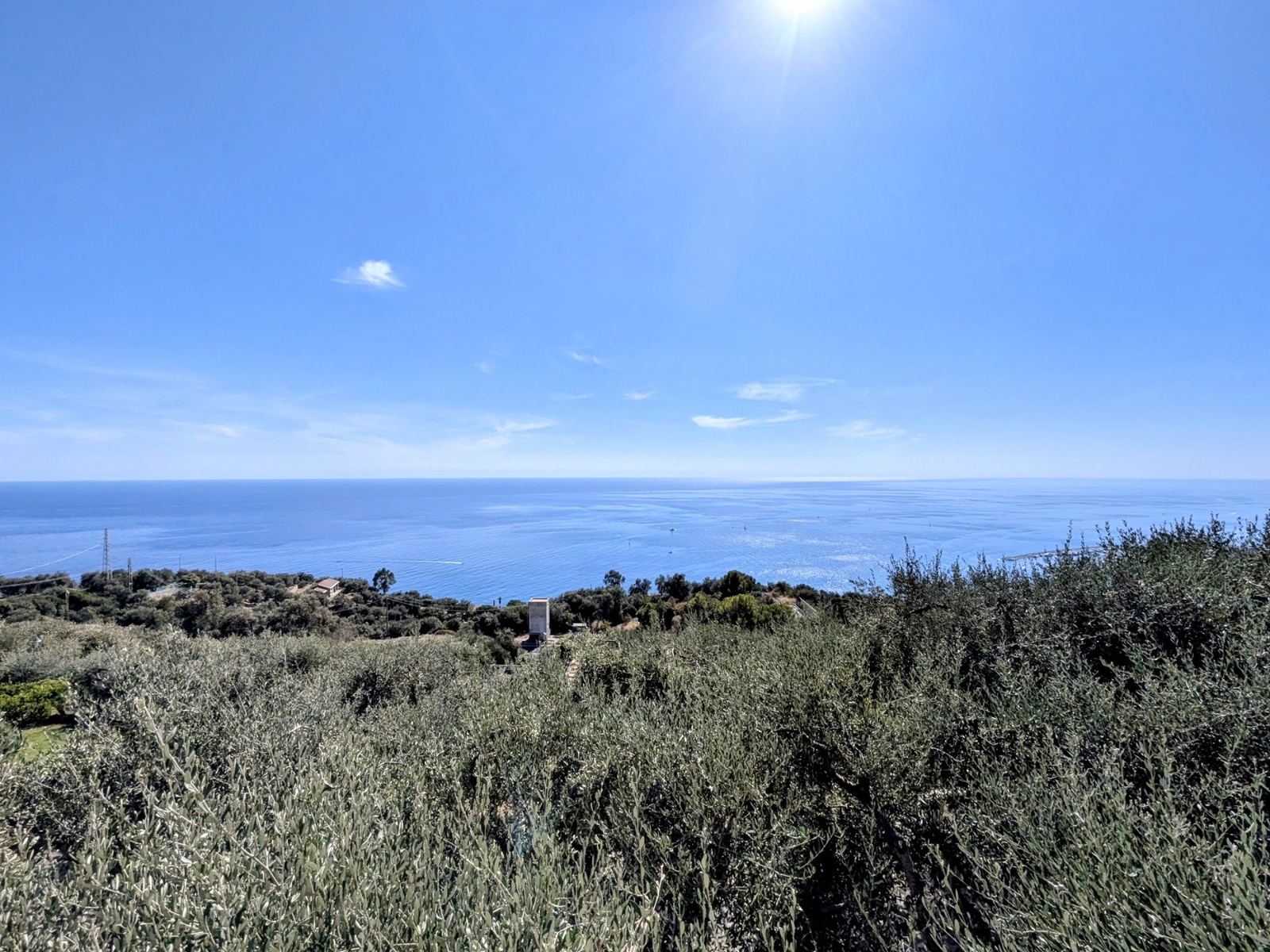
Four years later, on the September 2026 trip, I went back and did it properly, from the coast. First the back way up through Costarainera to the village, with the view out over the sea, then down to Aregai on the coast and back up to the official finish board by the church. Coming back down I stopped at each of the kilometre boards along the climb, so these photos read from the top down.
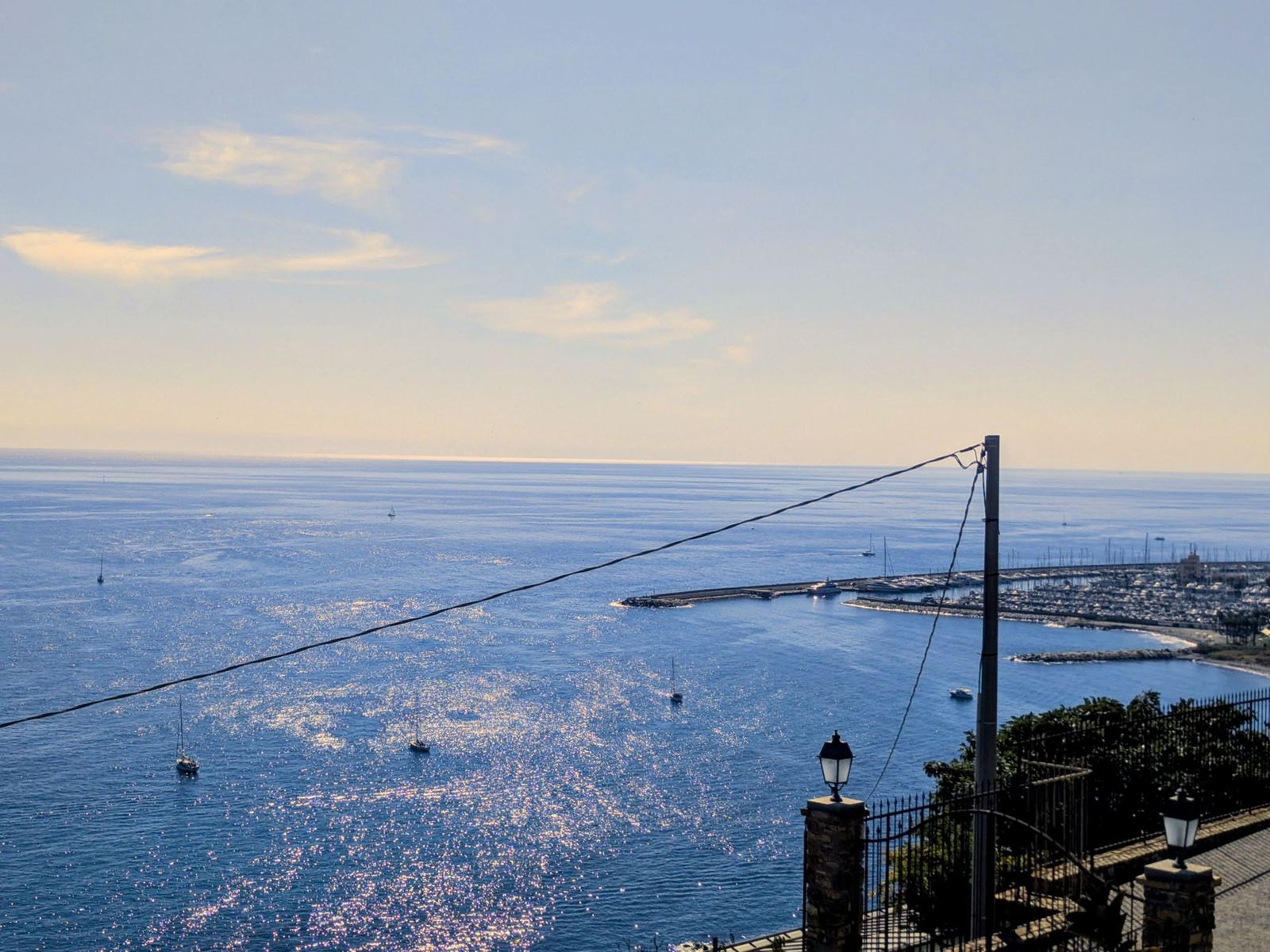
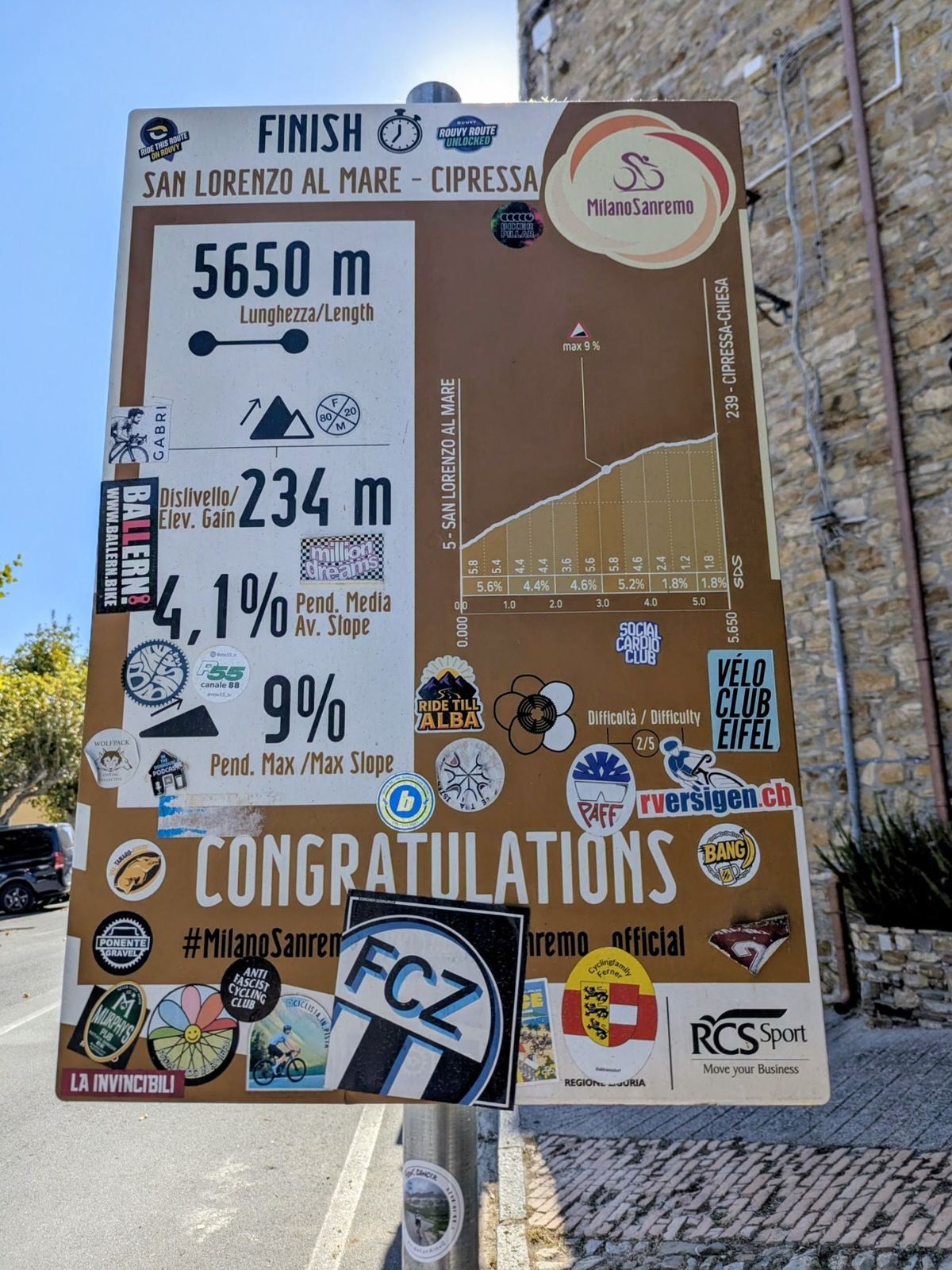
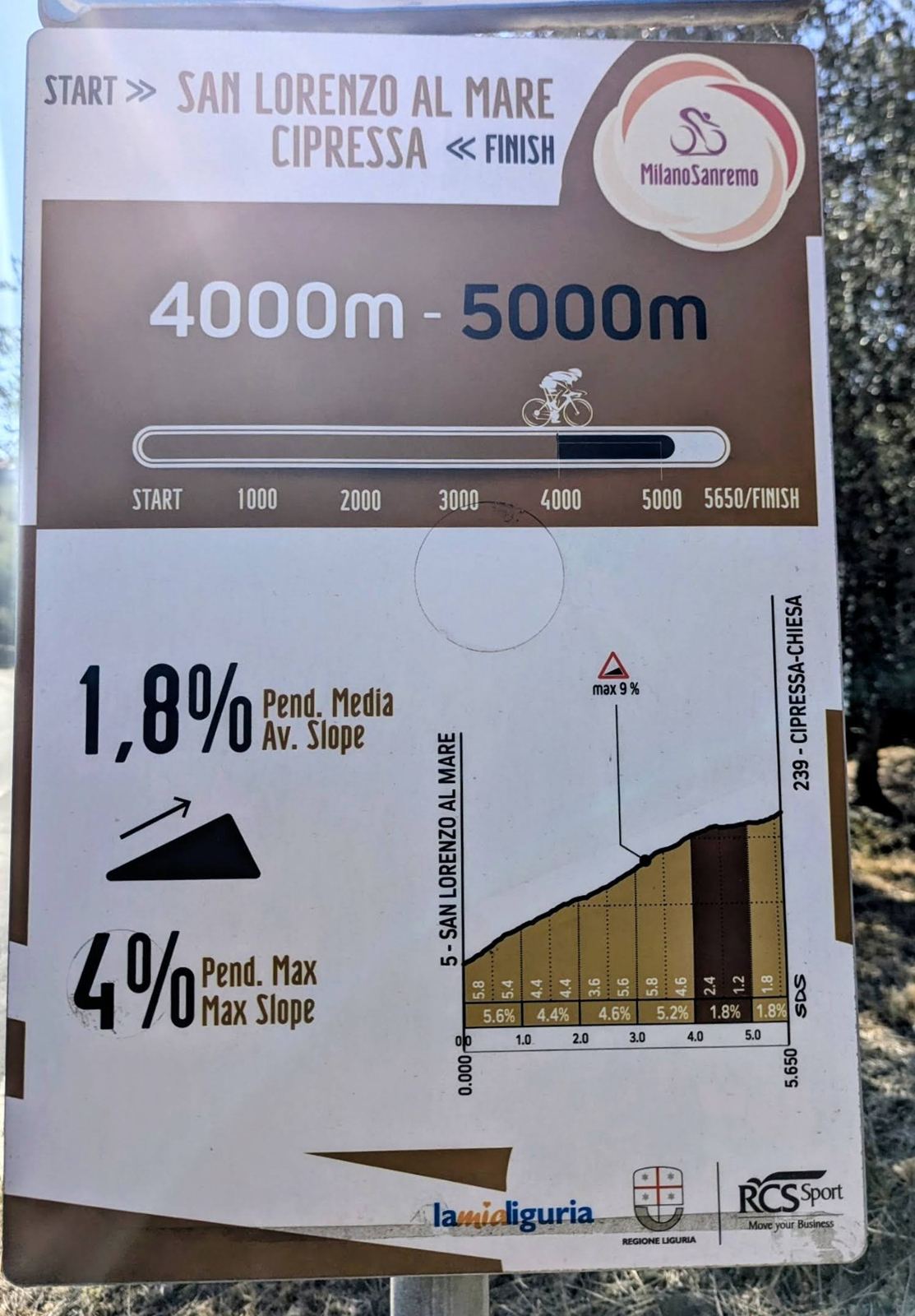
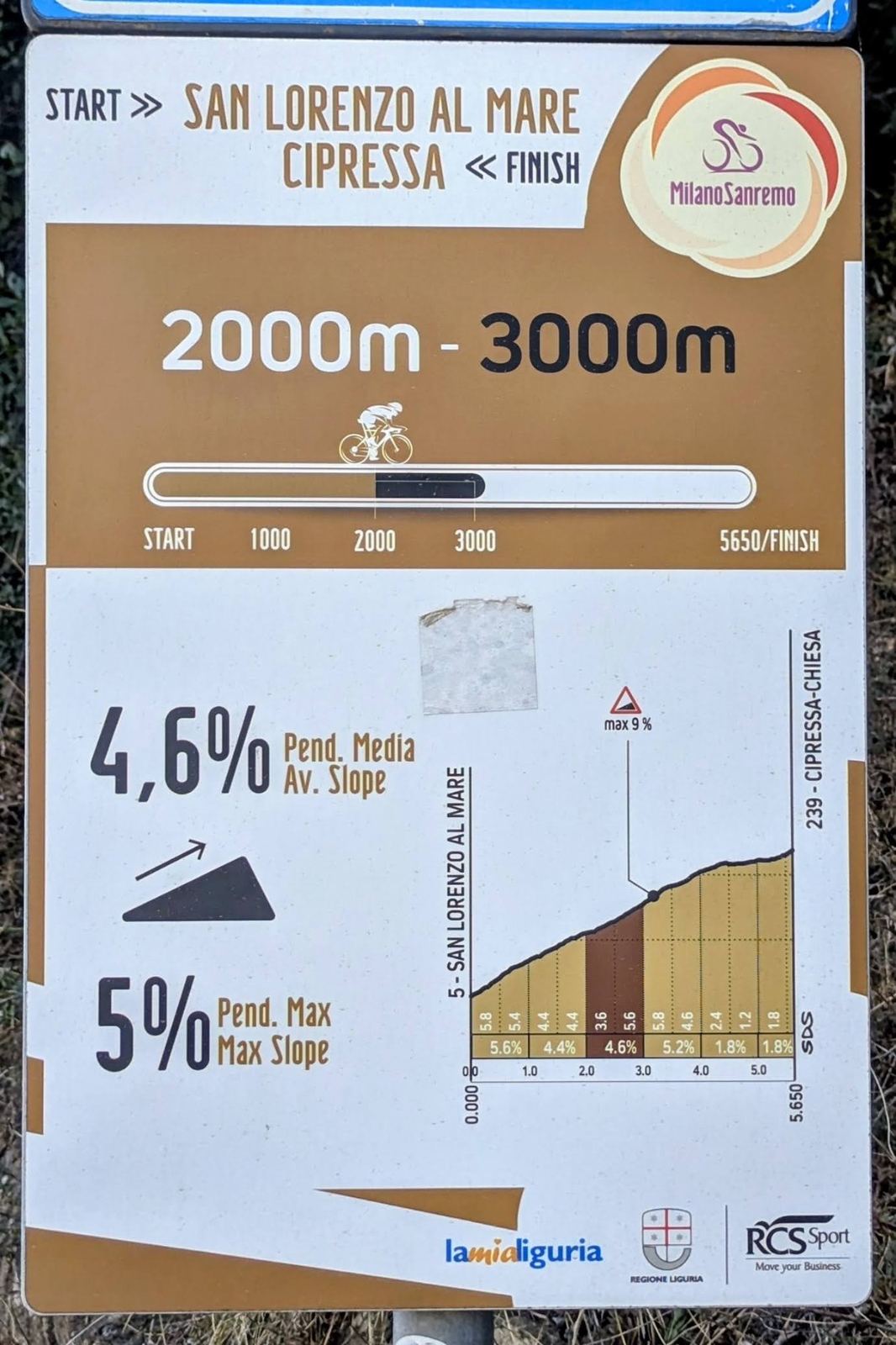
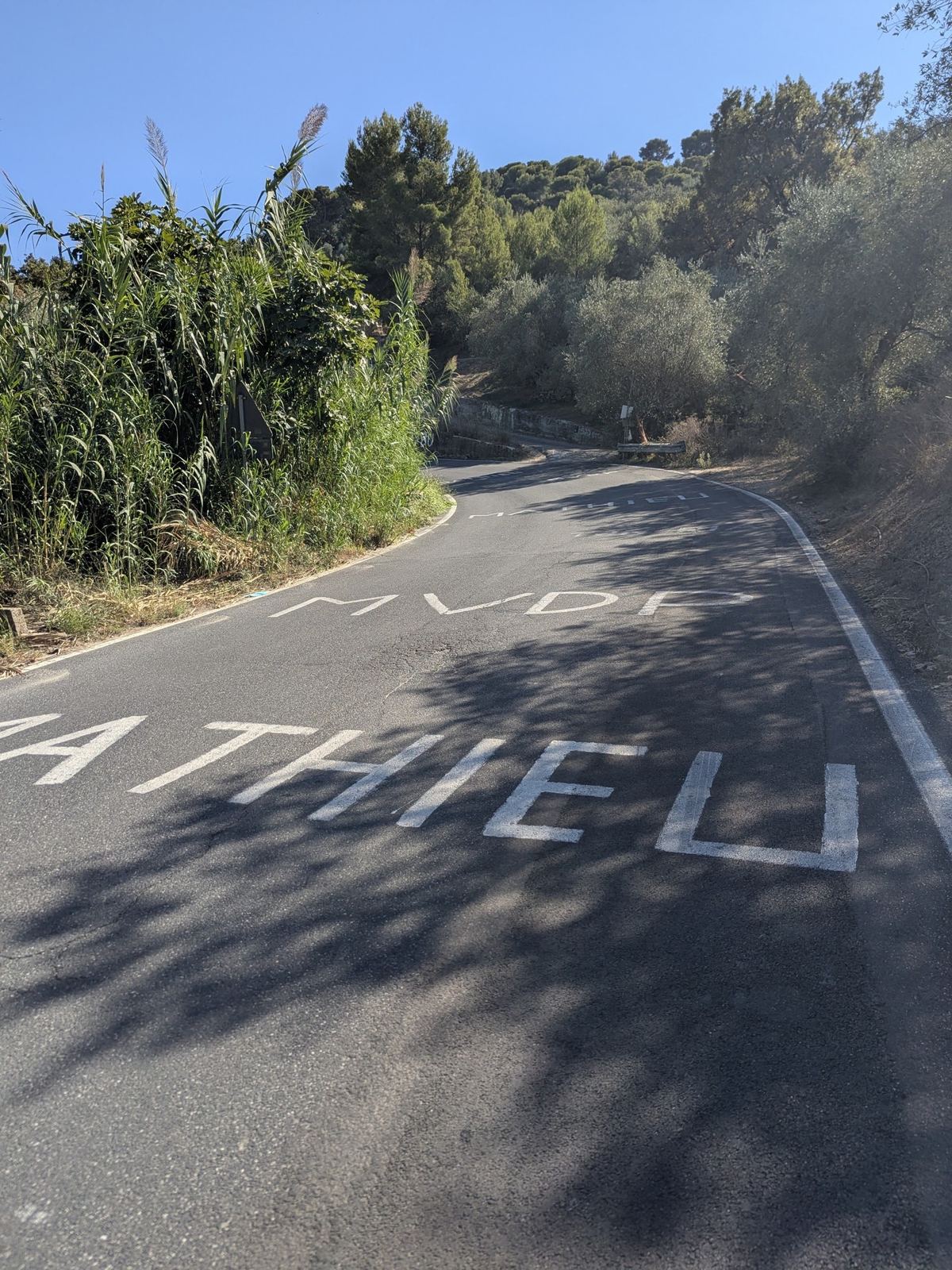
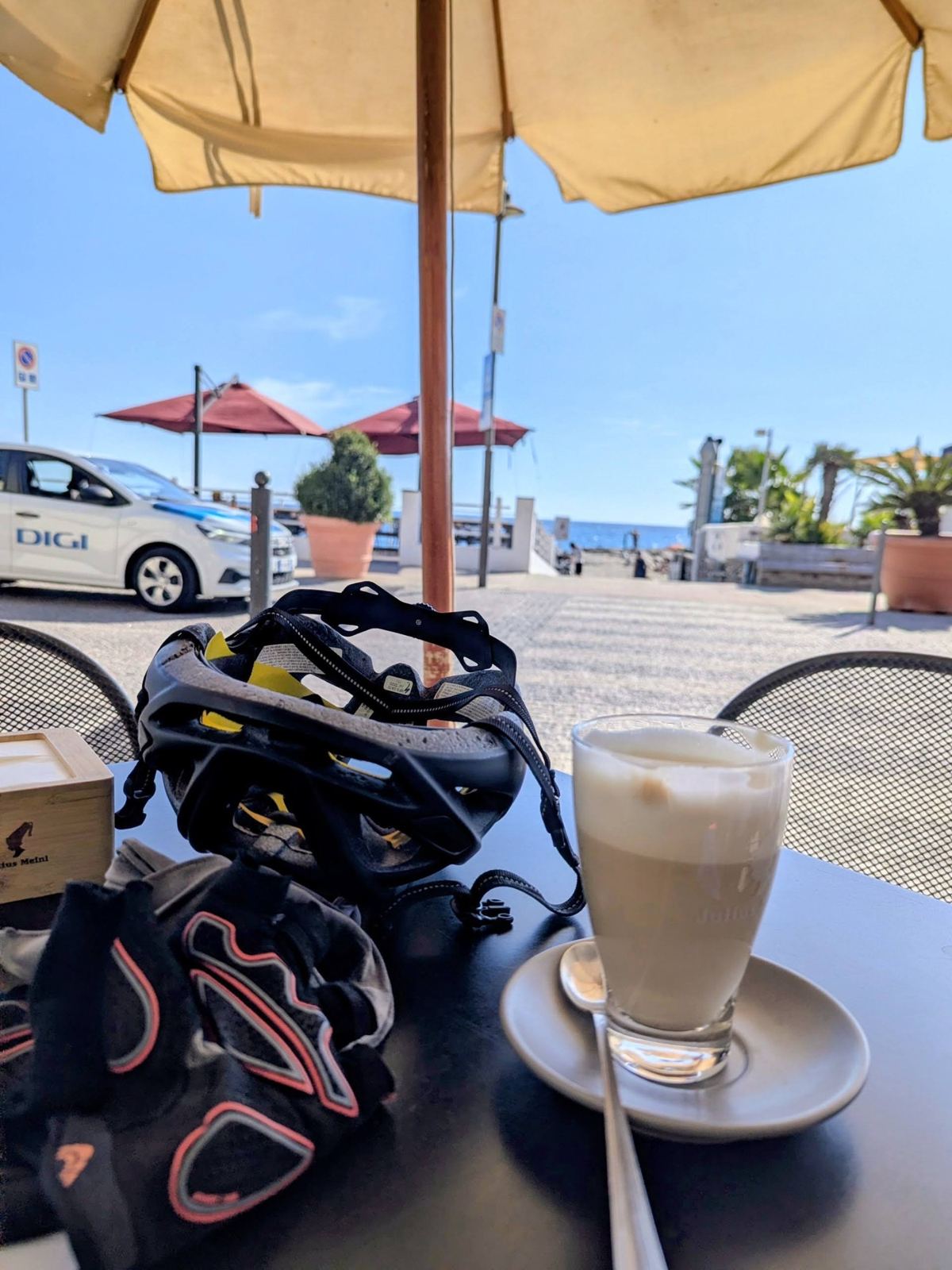
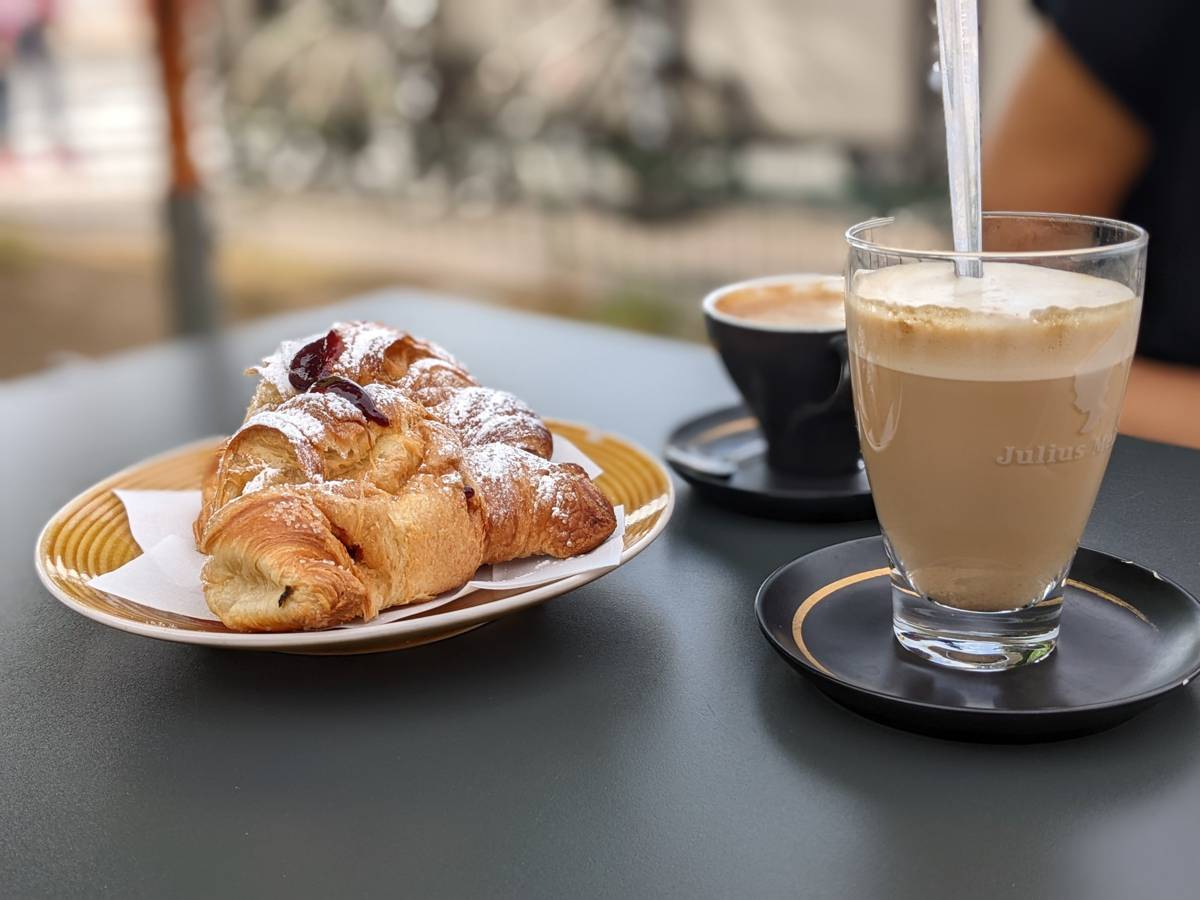
Then a coffee by the sea at Santo Stefano al Mare and the flat run home along the coast. 39.6km and 606m in just over two hours of riding.
Around The Rides